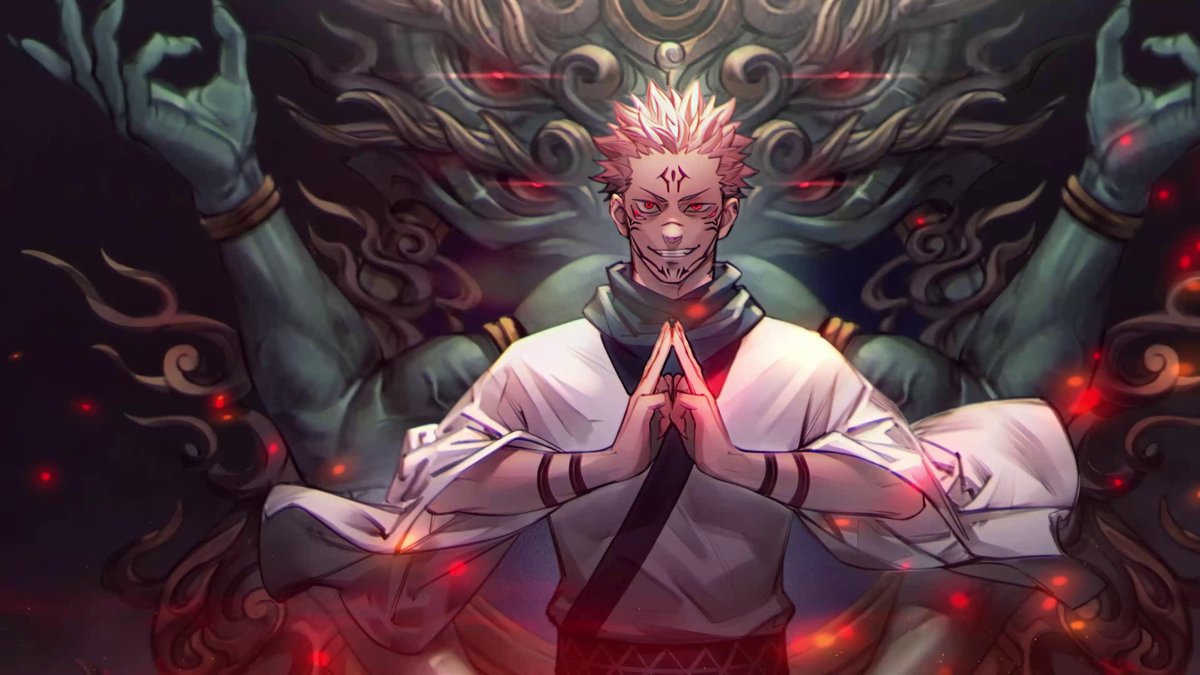
There's a fascinating phenomenon when powerful characters capture the imagination: their influence seems to span across different universes! Many fans search for "Sukuna in Demon Slayer," eager to understand if this formidable entity exists within the world of demon slayers and breathing techniques. While Sukuna's terrifying power and ancient origins might feel at home battling Muzan's Upper Moons, it's crucial to clarify: Ryomen Sukuna is unequivocally the King of Curses from Gege Akutami's sensational series, Jujutsu Kaisen.
This super pillar hub is dedicated to exploring the true, deep-rooted mythological tapestry that gives life to Jujutsu Kaisen's Sukuna. Forget the Upper Moons for a moment; we're diving into ancient Japanese history and Buddhist philosophy to understand the true inspiration behind one of anime's most iconic villains. Get ready to unpack the legends, symbolism, and historical accounts that shaped this unforgettable character.
The Two-Faced Legend: Unearthing Ryomen Sukuna's Mythological Origins
Long before Jujutsu Kaisen ever graced our screens, the name "Ryomen Sukuna" echoed through the annals of Japanese history. This isn't just a cool-sounding villain name; it's pulled directly from the Nihon Shoki, or the Chronicles of Japan, a foundational text of ancient Japanese history and mythology. Imagine a figure described with two faces and four arms – a truly monstrous image that perfectly sets the stage for a King of Curses. If you're curious to trace his lineage back to its earliest accounts, you’ll want to explore .
What makes this mythological figure truly captivating, and indeed, complex, is the conflicting nature of his portrayals. Some accounts depict Ryomen Sukuna as a malevolent entity, a rebel who defied the tyrannical rulers of the Yamato court, leaving a trail of destruction in his wake. This darker interpretation, an ancient antagonist fighting against authority, clearly resonates with Sukuna's role in Jujutsu Kaisen as he clashes with Jujutsu society's higher-ups. However, other historical texts paint a strikingly different picture, describing him as a benevolent leader who spread Buddhism and brought prosperity to regions like Hida, Japan. This duality leaves us pondering .
The Heian Era's Reign of Terror: Sukuna's Jujutsu Kaisen Incarnation
In Jujutsu Kaisen, Sukuna manifests as a powerful Cursed Spirit from the ancient Heian era, a period often considered the golden age of Jujutsu sorcery, but also a time ripe with powerful curses. His four arms and two mouths are direct visual callbacks to his mythological namesake, making his physical form as intimidating as his power. He is the undisputed King of Curses, a being of immense, unbridled destruction, sealed away for centuries until Yuji Itadori's fateful encounter. To understand the full scope of his devastating impact and historical significance, delve into .
Sukuna's terrifying presence is defined not just by his ancient origins but by the sheer, overwhelming might he commands. From devastating slashing techniques to formidable pyrokinetic abilities, his power set is unlike any other. When he unleashes his full potential, even the most powerful sorcerers struggle to stand against him. To truly grasp the overwhelming force he represents within the Jujutsu Kaisen world, learn about .
Chanting Death: Unpacking Sukuna's Buddhist Symbolism
One of the most profound connections between Sukuna and his mythological roots lies in the subtle yet powerful incorporation of Buddhist elements into his character design and abilities. Observe his hands when he activates his Domain Expansion, Malevolent Shrine; he forms distinct mudras, sacred hand gestures deeply significant in Buddhist and Hindu traditions. Specifically, these are often identified as the Enma mudra, referencing the Buddhist deity of death and the underworld.
His signature Domain Expansion itself, "Malevolent Shrine," is not just a destructive technique; it's a testament to this rich symbolism. The shrine structure within his domain bears a striking resemblance to the Tamamushi Shrine at Horyuji Temple in Nara, a pivotal Buddhist site in Japan. This architectural nod further solidifies the deliberate integration of Buddhist iconography. For a closer look at these intricate details, consider and .
Indeed, Jujutsu Kaisen masterfully weaves a complex tapestry of folklore and religion throughout its narrative, and Sukuna is a prime example. From the Yokai-inspired Cursed Spirits to entities like Mahoraga, which draw from Buddhist and Hindu concepts, the series is steeped in these ancient traditions. Understanding these broader connections can provide even deeper appreciation for the world Akutami has created. Discover more about .
Beyond the Misconception: A Deep Dive into a Legendary Villain
While the initial search might have led you here seeking "Sukuna in Demon Slayer," we hope this journey has provided a much richer understanding of Ryomen Sukuna's true origins and profound impact within Jujutsu Kaisen. His character is a brilliant fusion of ancient Japanese mythology, conflicting historical accounts, and profound Buddhist symbolism, all expertly crafted into one of anime's most compelling antagonists. This blend not only makes him terrifying but also endlessly fascinating, cementing his place as a truly legendary villain in the modern age of manga and anime.